If you’re the first in your family to sit at this table, you might also be the first to notice when growth and responsibility aren’t moving at the same pace. That noticing is leadership.
What the Article Actually Says
Kandasamy reports that as AI use grows, so does the fleet of data centers powering it, and that growth is straining energy grids, water supplies, and ecosystems in ways that go beyond carbon emissions (Kandasamy, 2025). The article cites the International Energy Agency’s projection that global data center electricity use will more than double to 945 terawatt-hours by 2030, and it notes that a single data center might use up to 5 million gallons of water a day, roughly what a town of 50,000 people uses.
The piece also broadens the conversation past emissions to include light and noise pollution, quoting researchers who describe data centers as potential “sensory danger zones” for wildlife, and it introduces the concept of “health-informed AI,” which weighs human health impacts, not just carbon output, when siting a data center (Kandasamy, 2025). The article closes by stressing that transparency around energy use remains limited, which makes independent verification of these harms difficult.
Beyond the Server: Women Leading Change
Kandasamy’s reporting makes a subtle but important shift: this isn’t just about carbon anymore. It’s about water tables, wildlife behavior, and whether communities even get the data they need to ask hard questions (Kandasamy, 2025).
For first-generation female professionals (FGPs), this matters because it reframes AI literacy as something broader than knowing how to prompt a chatbot. It’s about understanding the full weight of the systems behind the tools you’re increasingly asked to adopt, recommend, or manage at work.
What This Means for You, Right Now
If you sit anywhere near sustainability, operations, communications, or strategy in your organization, this article gives you language you might not have had before. “Health-informed AI,” a term researcher Shaolei Ren uses in the piece, describes weighing human health costs alongside carbon costs when deciding where infrastructure gets built (Kandasamy, 2025). That’s a concrete, defensible standard you might bring into a planning conversation.
This applies whether you’re 2 years into your career or 20. Early-career FGPs building credibility can use this framing to ask smart, well-informed questions in meetings, the kind that show you’re thinking several steps ahead of the immediate task. Mid-to-late-career FGPs moving into oversight or executive roles can use it to push for the transparency the article says is still missing; you don’t need to be a data scientist to insist that energy and water use get reported clearly.
Why This Matters for FGPs (First-Gen Female Professionals)
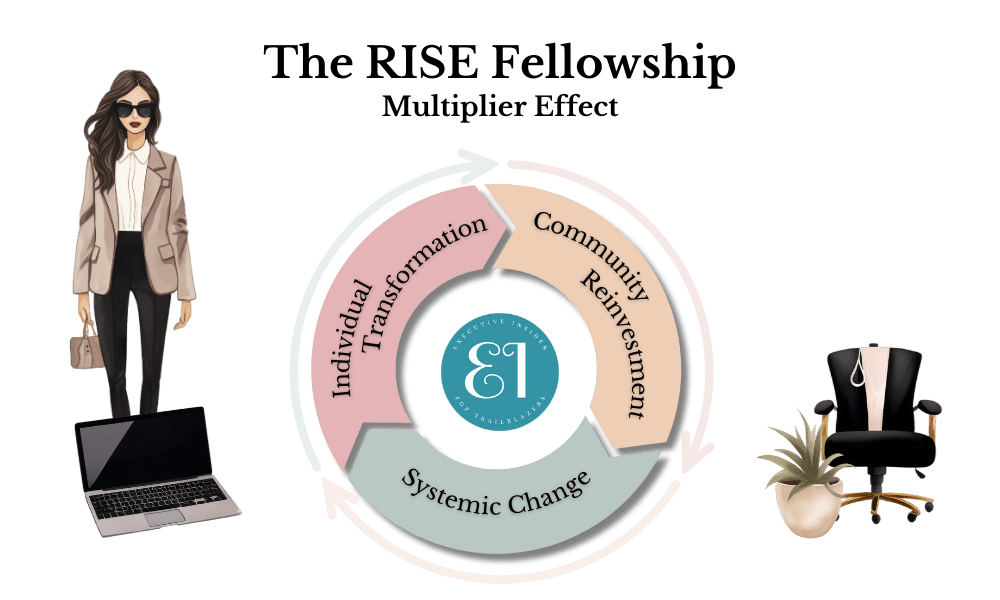
This source fits Executive Insider’s mission because it connects AI literacy directly to community reinvestment and systemic accountability, both pillars of our theory of change. The article’s core tension, rapid AI growth outpacing the transparency needed to manage its costs, is exactly the kind of invisible systemic barrier we exist to help you name and navigate.
We know you don’t have the luxury of assuming someone else is asking these questions. If you’re the first in your family to sit at this table, you might also be the first to notice when growth and responsibility aren’t moving at the same pace. That noticing is leadership.
Your Next Step
The next time your organization discusses adopting or expanding AI tools, ask one grounded question inspired by this research: what do we know about the energy and water footprint of this system, and is that information publicly available? If the answer is “we don’t know,” you’ve just identified a gap worth raising, and that’s exactly the kind of judgment call that moves you from task-executor to strategic voice.
Sources
Kandasamy, A. (2025, September 24). More data centers, more environmental problems? National Wildlife Federation. https://www.nwf.org/Magazines/National-Wildlife/2025/Fall/Conservation/AI-Data-Centers